

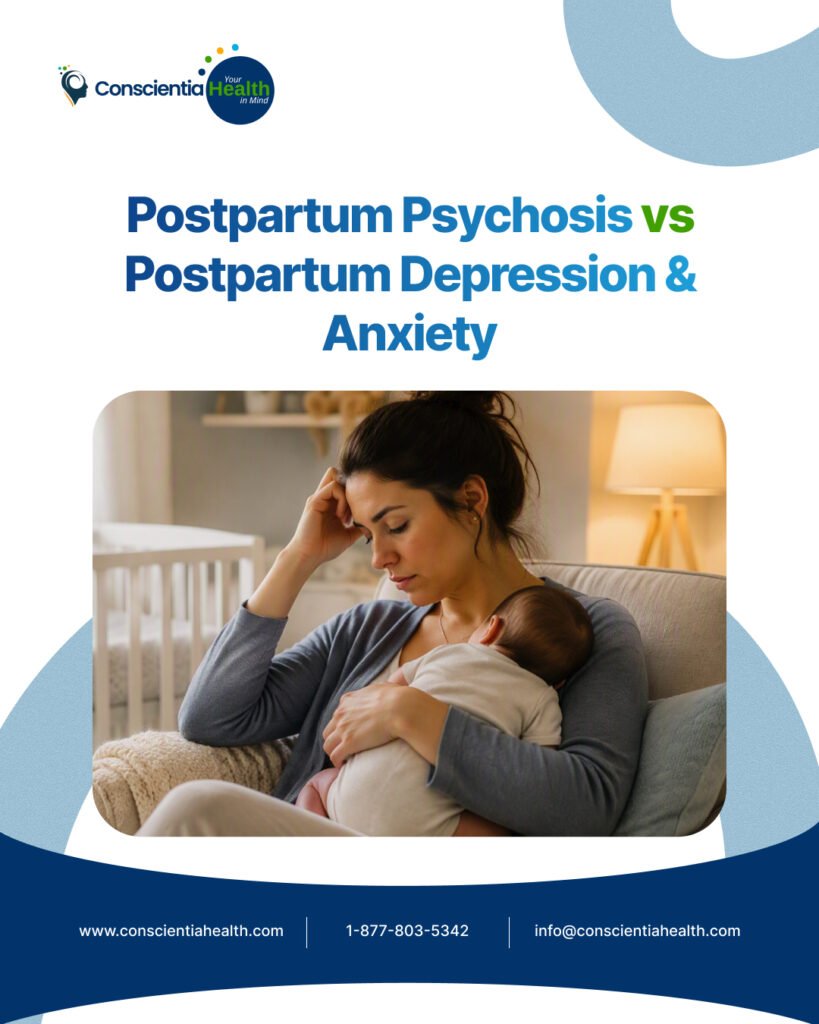
Bringing a baby into the world can be one of life’s most joyful experiences. It can also be physically, emotionally, and mentally overwhelming.
While many new mothers experience temporary mood changes after childbirth, some develop more serious mental health conditions that require professional support.
Understanding the differences between postpartum psychosis, postpartum depression, and postpartum anxiety can help families recognize warning signs early and seek appropriate care when it matters most.
Quick Answer
Postpartum psychosis is a rare but serious psychiatric emergency that may involve hallucinations, delusions, confusion, and loss of contact with reality. Postpartum depression and postpartum anxiety are more common and highly treatable, but professional support should be sought if symptoms interfere with daily functioning, bonding, or safety.
If a mother experiences hallucinations, suicidal thoughts, thoughts of harming the baby, severe confusion, or delusions, seek emergency medical care immediately.
Understanding Postpartum Mental Health
The postpartum period involves significant hormonal, physical, emotional, and lifestyle changes.
While “baby blues” are common and typically resolve within two weeks, some individuals experience more severe postpartum mental health conditions that require treatment.
The most common postpartum mental health conditions include:
- Postpartum Depression (PPD)
- Postpartum Anxiety (PPA)
- Postpartum Psychosis (PPP)
Although these conditions can share overlapping symptoms, they differ substantially in severity, urgency, and treatment needs.
What Is Postpartum Depression?
Postpartum depression is a mood disorder that can develop during the first year after childbirth.
Unlike the baby blues, postpartum depression often persists and can significantly affect a person’s ability to function and enjoy daily life.
Common Symptoms of Postpartum Depression
- Persistent sadness
- Frequent crying
- Hopelessness
- Feelings of guilt or worthlessness
- Low energy or fatigue
- Loss of interest in activities
- Difficulty bonding with the baby
- Changes in appetite
- Sleep disturbances
- Difficulty concentrating
Many mothers describe feeling emotionally overwhelmed, disconnected, or unable to experience joy.
When to Seek Help
Consider seeking professional support if symptoms:
- Last longer than two weeks
- Affect daily functioning
- Make caring for yourself or your baby difficult
- Continue worsening over time
What Is Postpartum Anxiety?
Postpartum anxiety is another common postpartum mental health condition that often receives less attention than postpartum depression.
Mothers with postpartum anxiety frequently experience excessive worry and persistent fear that feels impossible to control.
Common Symptoms of Postpartum Anxiety
- Excessive worry
- Racing thoughts
- Panic attacks
- Restlessness
- Feeling constantly on edge
- Trouble relaxing
- Difficulty sleeping
- Repetitive checking behaviors
- Rapid heartbeat, dizziness, or nausea
Some mothers find themselves repeatedly checking on their baby or constantly fearing something terrible might happen.
When to Seek Help
Seek professional support if anxiety:
- Feels overwhelming
- Impacts sleep and daily life
- Causes panic attacks
- Affects relationships
- Makes it difficult to function normally
What Is Postpartum Psychosis?
Unlike postpartum depression and postpartum anxiety, postpartum psychosis is a psychiatric emergency.
Although rare, postpartum psychosis can develop quickly, often within days or weeks after childbirth.
This condition affects a person’s ability to distinguish reality from false beliefs or perceptions and requires immediate medical attention.
Warning Signs of Postpartum Psychosis
- Hallucinations
- Delusions
- Severe confusion
- Disorganized thinking
- Extreme paranoia
- Rapid mood changes
- Agitation or restlessness
- Loss of contact with reality
- Severe sleep deprivation
- Thoughts of self-harm
- Thoughts of harming the baby
Because postpartum psychosis can place both mother and baby at risk, immediate intervention is critical.
Postpartum Psychosis vs. Postpartum Depression vs. Postpartum Anxiety
Postpartum Depression
Common Symptoms
- Sadness
- Loss of interest
- Fatigue
- Hopelessness
- Difficulty bonding
Reality Testing
Intact
Emergency Risk
Usually not an emergency unless safety concerns are present.
Postpartum Anxiety
Common Symptoms
- Excessive worry
- Racing thoughts
- Panic attacks
- Persistent fear
- Restlessness
Reality Testing
Intact
Emergency Risk
May require urgent intervention if severe panic, suicidal thoughts, or inability to function develops.
Postpartum Psychosis
Common Symptoms
- Hallucinations
- Delusions
- Confusion
- Severe disorganization
- Paranoia
Reality Testing
Impaired
Emergency Risk
🚨 Always considered a psychiatric emergency.
Warning Signs Families Should Never Ignore
Family members are often the first to notice when something is wrong.
Seek immediate attention if a mother experiences:
- Talking about harming herself
- Talking about harming the baby
- Hearing voices
- Seeing things that are not there
- Severe confusion
- Extreme paranoia
- Sudden personality changes
- Dangerous or unpredictable behavior
- Multiple days without sleep
- Detachment from reality
These symptoms are not a normal part of postpartum recovery.
When Should You Seek Emergency Help?
Postpartum psychosis requires immediate medical intervention.
Call 911 or seek emergency care immediately if a mother experiences:
– Hallucinations
– Delusions
– Suicidal thoughts
– Thoughts of harming the baby
– Severe confusion
– Extreme paranoia
– Loss of contact with reality
– Safety concerns involving the mother or baby
Prompt treatment can be life-saving.
Why Early Treatment Matters
The good news is that postpartum mental health conditions are treatable.
When symptoms are recognized early, treatment can help:
- Improve emotional well-being
- Strengthen family relationships
- Promote healthy parent-child bonding
- Reduce symptom severity
- Improve long-term outcomes
Many mothers recover successfully with the right support and treatment plan.
You Don’t Have to Navigate Postpartum Mental Health Challenges Alone
Experiencing symptoms of postpartum depression, postpartum anxiety, or postpartum psychosis can feel frightening and isolating.
Many parents assume they should be able to manage these challenges on their own.
The reality is that seeking help is a sign of strength, not weakness.
Professional support can help identify what’s happening, create an effective treatment plan, and provide the tools needed to move forward safely and confidently.
How Conscientia Health Can Help
At Conscientia Health, we understand that maternal mental health is an essential part of overall health and family wellness.
Our psychiatric providers offer compassionate, evidence-based care for anxiety, depression, mood disorders, trauma, and other mental health concerns.
Our Services Include
- Psychiatric Evaluations
- Anxiety Treatment
- Depression Treatment
- Medication Management
- Virtual Mental Health Appointments
- Individual Mental Health Support
Helpful Resources
- Mental Health Services in New Jersey
- Mental Health Services in New York
- Mental Health Services in Florida
- Mental Health Services in Texas
Understanding the differences between postpartum psychosis, postpartum depression, and postpartum anxiety can help families recognize warning signs and seek treatment sooner.
While postpartum depression and postpartum anxiety are common and highly treatable, postpartum psychosis is a psychiatric emergency that requires immediate medical care.
With the right support, recovery is possible, and no parent should have to face these challenges alone.
Schedule an Appointment
If you or someone you love is experiencing symptoms of postpartum depression, postpartum anxiety, or other mental health concerns, we’re here to help.
📞 Call: 1 (877) 803-5342
📅 Book an Appointment Today:
https://conscientiahealth.com/bookings/
FAQ
What is the difference between postpartum psychosis and postpartum depression?
Postpartum depression typically causes sadness, hopelessness, fatigue, and difficulty bonding with a baby. Postpartum psychosis involves hallucinations, delusions, confusion, and loss of contact with reality.
Is postpartum psychosis common?
No. Postpartum psychosis is rare, but it is considered a psychiatric emergency that requires immediate treatment.
Can postpartum anxiety occur without postpartum depression?
Yes. Many mothers experience postpartum anxiety without symptoms of depression.
When should I call 911 for postpartum mental health concerns?
Seek emergency care immediately if a mother experiences hallucinations, delusions, suicidal thoughts, thoughts of harming the baby, severe confusion, or loss of contact with reality.
Can postpartum mental health conditions be treated?
Yes. Postpartum depression and postpartum anxiety are highly treatable with professional support, therapy, medication when appropriate, and ongoing care. Prompt treatment of postpartum psychosis can significantly improve outcomes for both mother and baby.